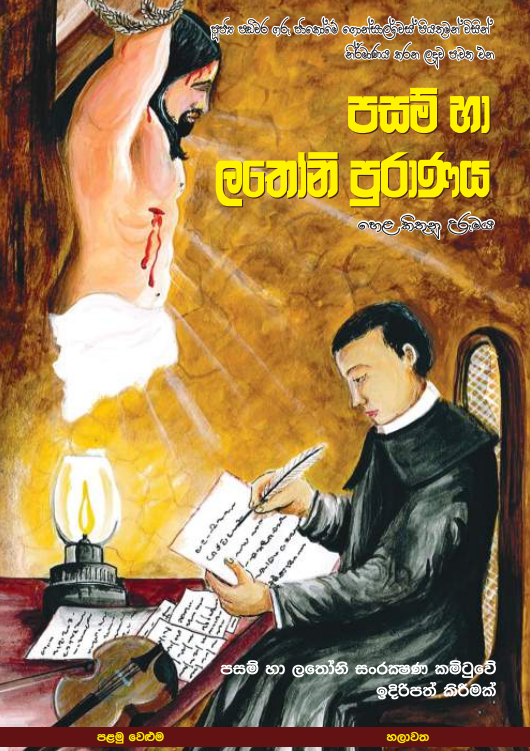
History and evolution of Pasam
It is no secret that Father Jusevas , who risked his life to come to our island at a time when Christianity was being eradicated from Sri Lanka for over a century and the Dutch were trying to spread the religion, was a miraculous gift of the Dhamma received from God the Father Himself.
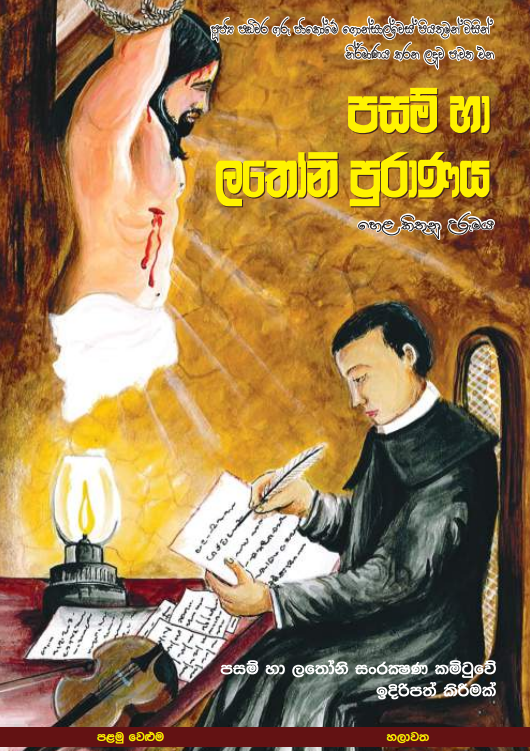
Father Josephas, who took on the difficult task of cultivating the Christian field in Sri Lanka, prepared a blueprint for fulfilling that mission while experiencing it. With the primary objective of bequeathing the difficult and challenging mission entrusted to him to the future, according to the wisdom of God and the guidance of the Holy Spirit, and seeking the help of his order, he personally invited his nephew, Father Jacome Gonsalves , to this difficult task. He did so by using his innate ability and knowledge of languages, aiming at the future of the Word of God.
Taking the original goal of his master as his own, the young Father Jacome Gonsalves used the gifts of literature, knowledge, skills and talents that God had given him to spread the Christian faith in the country.
As well as being a linguist and possessing a profound literary knowledge, he also had other unique abilities second to none. That was his creative manipulation of language to make it accessible to literary enjoyment, and his embellishment of prose and poetry by applying a new musical universal language to them. He wrote many books in his own voice. Among them. The book of the Nine Sermons, which is still in the possession of many elderly Christians today, is considered a national heritage book. Because of his expert linguistic knowledge, he is known as the Venerable Jakome Gonsalves Pooja Prasadeen Thero.
Like Rabindranath Tagore, who was called the scholar of the Mahabharata, although he was not born in our country to leave a mark on the world map as a native Christian, it is not an exaggeration to call him the great Christian scholar of the country, who contributed to our country and its culture. Among the many advances that local literature has been gifted by him, the fast-dying Pasam and Latoni mournful folk singing style is a universal literary heritage that no Christian should forget.
Among the greatest discoveries of the world and the creations of the universe itself, linguistics and creative language have always been number one. It is truly a universal creation. Recognizing its weighty essence, he not only made language his heartbeat, but also transformed very complex religious teachings and principles into very simple language for the people through the subtle waves of language, but also added qualities to its language and literature, created prose and poetry, delicately touched the subtle varieties of human emotions, and added the three divine teachings of Jesus suffering, death on the cross and resurrection, and the flavor of sorrow to bring them to the peoples use. His efforts are highly commendable. I see it as a miracle.
The way that prose and verse written on that seed of matter, in the subtlety of verse and verse, vary from verse to verse, from village to village, from house to house, from door to door, from mustache to mustache, from verse to verse, its shapes, its beauties, its rhythm, its tone variations, high and low, in those many unspoken decorations, I see the miracle of universal creation. Where did he get the wisdom to create by manipulating language so delicately???
Can such cosmic karmic creations be allowed to die?
How many human hearts have been touched through such mournful folk singing styles? How many lives have been healed? How many human lives have been saved?
Can such universal creations be allowed to die? Should they be allowed to disappear? Recognizing that it is a national need to make such indigenous national heritages bear fruit without allowing them to fall to the ground, the Director of the Department of Christian Religious Affairs, Mrs. Chathuree Pinthu, not only acted promptly and provided the necessary basic first aid, but also, considering it a timely national need, prepared plans for their immediate conservation. The fact that such universal creations still exist is also a miracle. It is a wonder.
Because in a world that changes like lightning, the familiar customs passed down from generation to generation are dying at the same speed with the birth of new technological tools. Back then, grandparents were considered as sources of knowledge. As centers of advice. The family institution that was tied together in such a cultural structure has now been shattered and destroyed. At the beginning of the great-grandparents day, their children and grandchildren would sit on the stilts and learn the Pasam Lathoni songs they had inherited from their grandparents in a very authentic way. Such priceless and glorious heritages that have been passed down through oral tradition are no longer with us today.
In order to identify the dangers in it very subtly and find a method that will ensure that those noble, creative, and mournful folk singing styles will not die for another millennium but for the entire existence of the world, the Department of Christian Affairs will first seek out and meet with experts in that field. By seeking out such experts from all over Sri Lanka, collecting their valuable ideas and suggestions, a Pasam Preservation Committee will be established.
Conservation of the Past
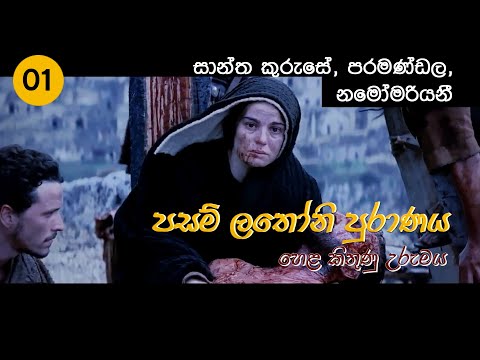
The journey of nearly four years begins in Salapura. There was a special reason for it. If I do not write it down, it is like committing suicide by myself. I say this because a first lover who fell in love with Pasam Lathoni was with us. But, today he left us. His name is Venerable Frank Tissera Poojaprasadi Thero. I have learned a lot from him personally. I have a subtle pride in my heart for being the second to fall in love with Pasam. A pride. It is a very genuine little selfie in this note. We did not need to search for Pasam Lathoni in Salapura. The fact that it was completed more wonderfully than we thought was like half of my weight was lifted from my head and placed on the ground. The Pasam Lathoni work in Salapura, from beginning to end and from end to beginning, is an unforgettable ocean of memories. It is so large that it exceeds the amount of information in a separate doctoral research book. The three days of photography, personally, were the most miraculous days of my life. It is also impossible to describe in words. I will conclude by saying that it is another miracle.
Not stopping there, from Meepura, which was nicknamed the Little Rome that took our country to the world with the Easter show. It is the stage where our second journey began. Meepura, like an art gallery, is a fertile haven that has given birth to artists and continues to give birth.
Among the unforgettable memories, it would not be a lie to say that the launch of Pasam Lathoni in Salapura was another wonderful experience. It was a very touching moment when brotherhood was exchanged from Salapura to Meepura.
I should not record the exploits of Meepura , as well as those of Salapura, for that would be a futile attempt to explain a mystery. It is a collection of such a multitude of wondrous deeds. It is also as miraculous as Salapura.
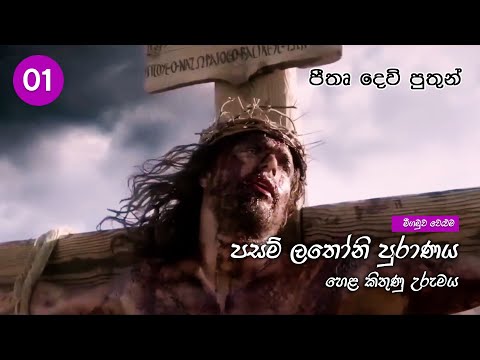
The launch of the Mee Pura Passam, at the level of Salapura, was still not possible due to the economic crisis in the country and certain positions of the government. But it was made even more attractively simple by spreading out an open, lively backdrop of the coast, symbolically small, but meaningful.
We went to the South without stopping at Meepur. It was, in the truest sense of the word, the most exploratory trip we took in search of Pasam. Having obtained its sources from Leonard Cooray and Amitha, the stalwarts of the Pasam Conservation Committee, we started from Wadduwa and went to Kalutara and then to Galle, with the help of the patron fathers of the Southern Lanka Christian Art Association, Rev. Jude Saparamadu, Rev. Father Dinesh Fernando and others. Our gratitude goes to them.
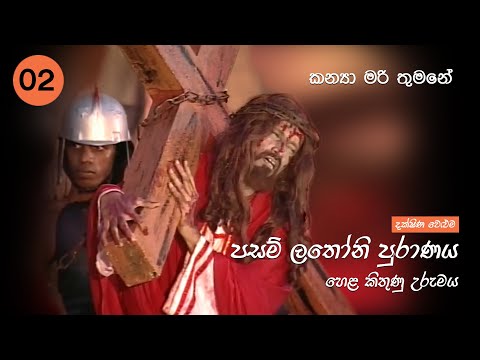
In the literal sense of the word, the Pasam Lathoni Thimbiri Ge, which was not even in Meepur and Salapur, emerged from Dakshina. When all was added up, it was 513. When it was selected, there were 114 Pasam Lathoni that were unique to Dakshina. Of these, they were used to singing a small number of 48 at first, but later it was possible to increase it to 60. The effort taken by the director and the department staff to select Pasams that did not belong to Salapur and Meepur, but belonged only to Dakshina with great restraint and effort is highly commendable. In the meantime, we should not forget a few lights that were lit without sleeping from the beginning to the end. There were two pillars standing on either side like the shadow of the director of Chathuriya Pinthu. Their names are Hasini and Amita
How Pasam was filmed in the South
Three days before the filming was over, I took the main cameramen and the art director to Nauthu Mountain for a re-examination. Everything was final. The entire area had been bulldozed to erect a cross on the mountain. “Oh my,” he said with a long sigh. The narrow path we had taken the day before was completely blocked. It was impossible to even think of going there. God bless all the backdrops we had observed and confirmed the day before. A forest had been cut down and a cross had been erected. We came down from Nauthu Mountain, wondering how Jesus would have felt when he went to the cross.
Our first task was to gather all the groups in the South for a religious initiation with a dharma retreat. It was short but life-changing. But there were obstacles. Technological obstacles, communication obstacles, and all those unspoken obstacles, we were finally able to make a religious initiation.
Despite the geographical range of Kalutara in the south, eight villages and isolation, the representation of Galle was second to none. It was an extremely difficult task to level up the Pasam and Lathoni singing from the existing level to the end. Since it took place in Chatarika itself, I was finally entrusted with it as an act of Chatarika suppression. Although it was a journey that came amidst extreme obstacles, now I see that a bunch of extremely beautiful experiences have been added to our lives. The director of the department and the rest of the team were with me throughout the entire work. The reason for this is to be strict like a dictator in a journey towards a goal and beautiful in emotional transactions. In their own words, “Sarai, Tikai”. Like a beautiful dictator.
It was a very difficult task, having to plan everything in a very short time. We started with one Poya, filmed the second Poya, and our ambition was to have the design in the hands of the public before the third Poya was received. It was truly a miracle for me. It happened not in Salapur, Meepura, but only in Dakshina.
The majority of the people who sang the Pasam were women. Most of them were old and elderly. Although the shooting took place over three days, February 23, 24, and 25, for us, those three days were like one day. Because after a three-four hour break, we started working again. The shooting ended with a 27-hour long operation. Although the time passed, we did not notice it because we were all right and intact in the main task.
We started work in the early morning, and we hung on for 27 hours straight, but we didnt hear a single groan. Oh no now its hard for us, now its enough .... We didnt hear any of this. The steadfast determination of our 80- and 90-year-old grandparents is at the top of the challenging experiences that have moved me. My worship for that is unwavering.
Those who contributed to the design and the artists who contributed to the technology were with me in full swing. That was because of the constant experiences they had with me in the past work. Even today, whenever they talk, they remember it, thanking God. It was an extremely beautiful experience for them. A dream. They will never forget it. No matter what is forgotten, my beautiful commandment will not be forgotten, speaking in my own words, “One, two three four one a...x...x...n....” Just like a pigs fish is cut on the pigs back.
We started from Salapura with a prayer of Ha Ha Pura, passed Mee Pura and finished our work in the south . Wahakotte is waiting to say “A..K...Sh...n...” next. Our future plan is to continue working in Wahakotte and go to the north. I will leave it all to God, and I will say that God took care of everything, good or bad, that happened.
All of this happened by the grace of God Almighty. To Him belongs the glory for all that is good. And so it ended.